FOUNDER & CEO @ MAXORA AI ·PH.D. — NTU EE
Yun-Yen
Chuang
教 AI 自己學會怎麼探索
About
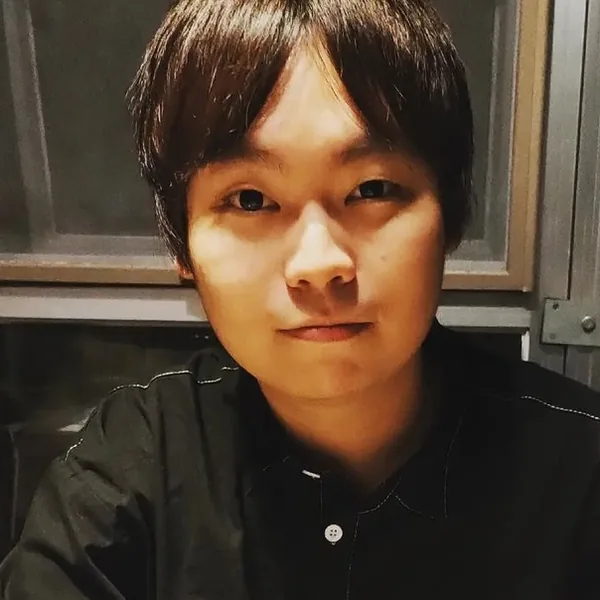
I am the Founder & CEO of Maxora AI, where I turn research into product. My doctoral research at National Taiwan University, advised by Prof. Hung-yi Lee, works at the intersection of generative modeling and reinforcement learning for language.
My work asks a single question: instead of hand-crafting how a model adds noise, samples tokens, or explores — what if a second network learned that policy? The generator becomes the exploiter; a meta-trained scheduler or explorer does the searching.
A recurring move runs through my papers: a second network that learns how to explore or schedule, so the main model can focus on generating or detecting. Meta-DiffuB and MetaEx-GAN make this explicit with a scheduler / explorer–exploiter pair; QMVDet uses a query-based-learning scheduler to decide when to guide a detector; and it traces back to RapGAN and SODM. Each method below is laid out as an instrument you can scroll through.
What we're building
At Maxora AI I'm turning the meta-exploration idea into a long-running growth agent: an autonomous system that designs, ships, measures, and re-designs marketing — and never stops learning from what it launches.
▸ RESEARCH NOTES Harness Engineering in production How I keep a long-running AI agent stable, observable, and self-improving — the engineering behind the loop. Read the notes → ▸ ENGINEERING NOTES Building a local Claude Code Self-hosting a small model, beating a tiny context window, and an async agent loop — how to build a privacy-first coding agent at Claude-Code level. Read the notes → ▸ ENGINEERING NOTES An image-gen system to rival Gemini Multi-reference identity-preserving compositing, instruction editing, and readable in-image text — Gemini-class image generation, self-hosted on consumer GPUs, from scratch. Read the notes →Research
Selected work on meta-exploration, text diffusion, and generative models. Each card opens a full, interactive walkthrough that steps through the method.
Education
Ph.D., Electrical Engineering
National Taiwan University
SEP 2022 – 2025 · SPEECH LAB · ADVISOR — PROF. HUNG-YI LEE (李宏毅)
M.S., Engineering Science & Ocean Engineering
National Taiwan University
SEP 2015 – JUN 2017 · iCAN LAB · ADVISOR — PROF. RAY-I CHANG (張瑞益)
B.S., Computer Science
National Changhua University of Education
SEP 2011 – JUN 2015
Get in touch
Open to research collaborations, talks, and conversations about meta-exploration, generative models, and applied AI.